
Interactive chess rulebook
The rules, move by move.
Nine short chapters. Each one has a board that shows the rule, and most let you step through it.
The basics
Chess is played on an 8×8 board between two players, White and Black. Each player starts with 16 pieces. White always moves first. The goal is to checkmate the opponent's King.
Each side has
- 1 King
- 1 Queen
- 2 Rooks
- 2 Bishops
- 2 Knights
- 8 Pawns
White pieces start on rows 1–2, Black on rows 7–8.
How pieces move
Every piece moves differently. Pick a piece below to see its movement pattern on the board. The dots show where it can move.
King
- Moves 1 square in any direction
- Cannot move into check
- Most important piece, so protect it
Piece values and scoring
Material values help explain trades and exchanges. A move that wins more value than it gives up is often favorable, though checkmate and king safety always outweigh raw points.
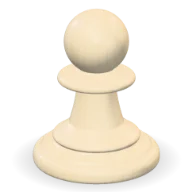 Pawn
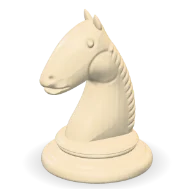 Knight
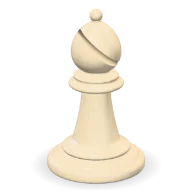 Bishop
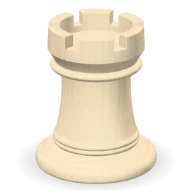 Rook
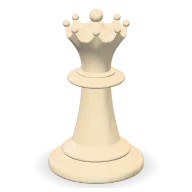 Queen
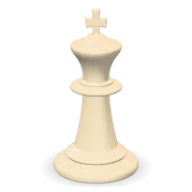 King
Pawn special rules
Pawns move forward only but capture diagonally. On their first move they can advance 1 or 2 squares.
Castling
Castling is the only move where two pieces move at once. The King moves 2 squares toward a Rook, and the Rook jumps to the other side of the King. Used to protect the King and activate the Rook.
En passant
A special pawn capture. If an opponent's pawn advances 2 squares and lands beside your pawn, you can capture it as if it only moved 1 square. It must be done immediately: the chance is gone after the next move.
Check and checkmate
Check: your King is under attack. You must resolve it immediately by moving the King, blocking, or capturing the attacker. Checkmate: the King is in check with no escape, and the game is over.
Stalemate and draw
Stalemate happens when a player has no legal moves but is not in check. The game ends as a draw. Other draws: insufficient material, threefold repetition, or 50-move rule.
Draw conditions
- Stalemate: no legal moves, not in check
- Threefold repetition
- 50-move rule (no capture or pawn move)
- Insufficient material
- Mutual agreement
The Black King in the corner has no legal moves but is not in check. That is stalemate.
Pawn promotion
When a pawn reaches the opposite end of the board (rank 8 for White, rank 1 for Black), it must be promoted to a Queen, Rook, Bishop, or Knight. Almost always promoted to a Queen.